Calm Games for Kids
Gentle, safe iPhone and iPad games for ages 4 to 6.
Read more →By Karim Hadid, who makes Oopsies · Last updated October 16, 2026
“…overall it's a great game to play with my autistic son.”
Every autistic child is different, so no game is right for all of them. But when parents look for games for autistic kids, the same few things come up again and again: no rush, no surprises, sound they can turn off, and one simple thing to do. This page explains each one in plain words, gives you a checklist you can print, and says honestly where Oopsies fits and where it doesn't.
There's no official "autism-friendly" label for games. These six points are a good place to start, and most of them also appear in the Game Accessibility Guidelines, a reference game developers use: adjustable game speed, separate sound controls, simple clear language, in-game help, and "Avoid any sudden unexpected movement or events". Your child may need all six, or only one. For sound, motion and surprises in detail, see sensory-friendly games; for playing without words, games for nonverbal kids.
A countdown, or a level you can lose by being slow, turns play into a test. Look for games where your child can take as long as they need, or where the timer can be hidden.
Some kids love the sounds, others find them too much. You should be able to turn sound off inside the game, and the game should still make sense without it.
Ads, purchase pop-ups, chat with strangers, flashing or sudden loud noises can end a good session fast. The fewer surprises, the better.
One clear thing to do, like a tap, shown with pictures rather than words. No reading, no speaking and no tricky gestures needed to play.
The same rules from one level to the next, and a clear heads-up before anything changes, so your child knows what's coming.
A hint or a nudge after a while, so getting stuck doesn't turn into frustration.
Go through it with the game open, ideally before your child plays. A game doesn't need every box ticked: the ones that matter most are the ones your child reacts to.
Also worth checking
Autism-friendly game checklist, from playoopsies.com/autism-friendly-games/
To save it as a PDF instead, choose "Save as PDF" in the print window.
Oopsies is a free seek-and-find game: someone pressed a big red button, the Oopsies scattered across many worlds, and your child finds them one by one, over 100 levels in all. Here's how it compares with the checklist. Every point below was checked in the game's code.
| What to look for | What Oopsies does |
|---|---|
| No time pressure | The timer counts up, never down, and no level can be lost. The stopwatch button on the home screen hides the timer and the "+10 s" a wrong tap adds. Leaderboards exist, but only open if someone taps the leaderboard button under a world, and hiding the timer hides those buttons too. |
| Sound you control | A speaker button on the home screen turns off all of the game's sounds, and the setting stays. Nothing in the game depends on hearing a sound. |
| Nothing unexpected | No ads, no in-app purchases, no chat. When iOS Reduce Motion is on, Oopsies tones down its animations (home screen, cards, the reveal at the start of each level). |
| One simple action | Tap the right Oopsie. Most levels show a picture of who to find; a few worlds look for something else (a shadow, a pair of twins) and say so before play. There's very little text while playing, and nothing to say out loud. |
| Predictable rules | Inside a world, every level works the same way: see who to find, find it, tap it. Each world shows its twist on a start screen ("Whose shadow?") before play begins. |
| Help when stuck | In several worlds, a hint shows up after about 30 seconds without a find: a glowing ring around the Oopsie, or a close-up that zooms out. |
Also: levels play in airplane mode (progress syncs once you're back online), it's rated 4+, its App Store privacy label says "Data Not Collected", and it runs on iPhone, iPad, Mac (M1 or later) and Apple Vision Pro. On iPad, the bigger screen gives the Oopsies more room to hide and gives small fingers a bigger target.
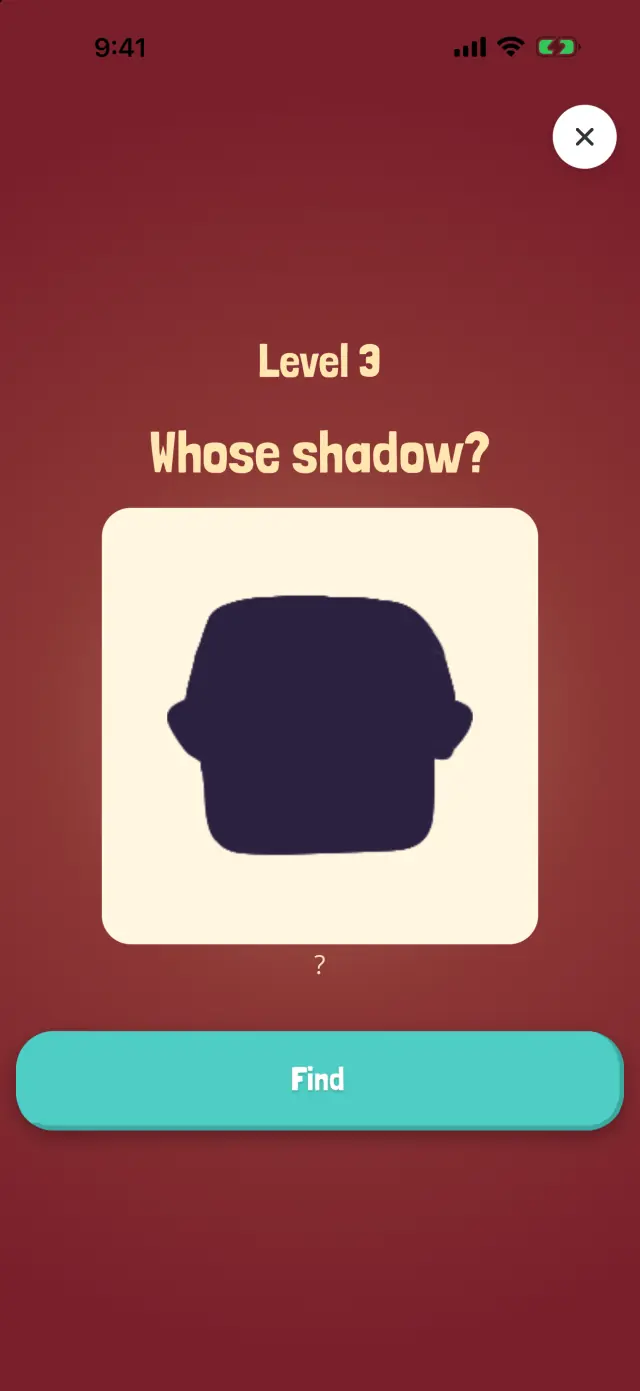
🌑 Shadow Show
Which Oopsie casts this shadow?
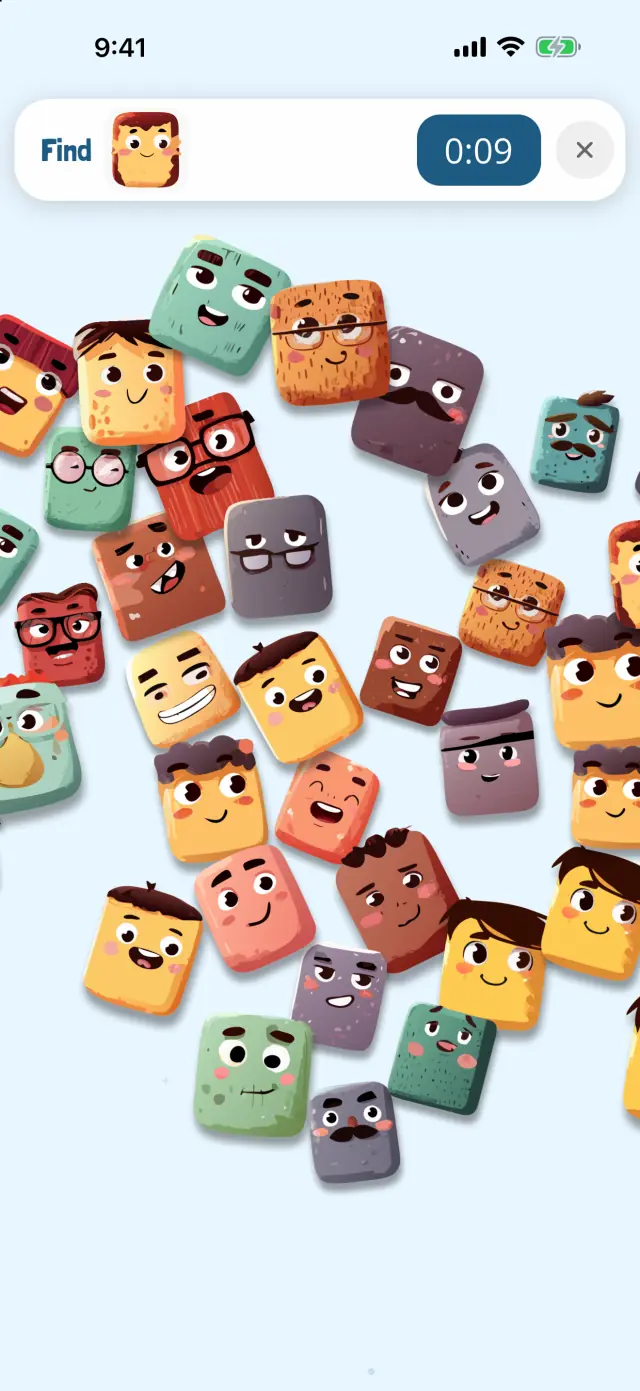
🥰 Frosti Floops
Oopsies are feeling cuddly.
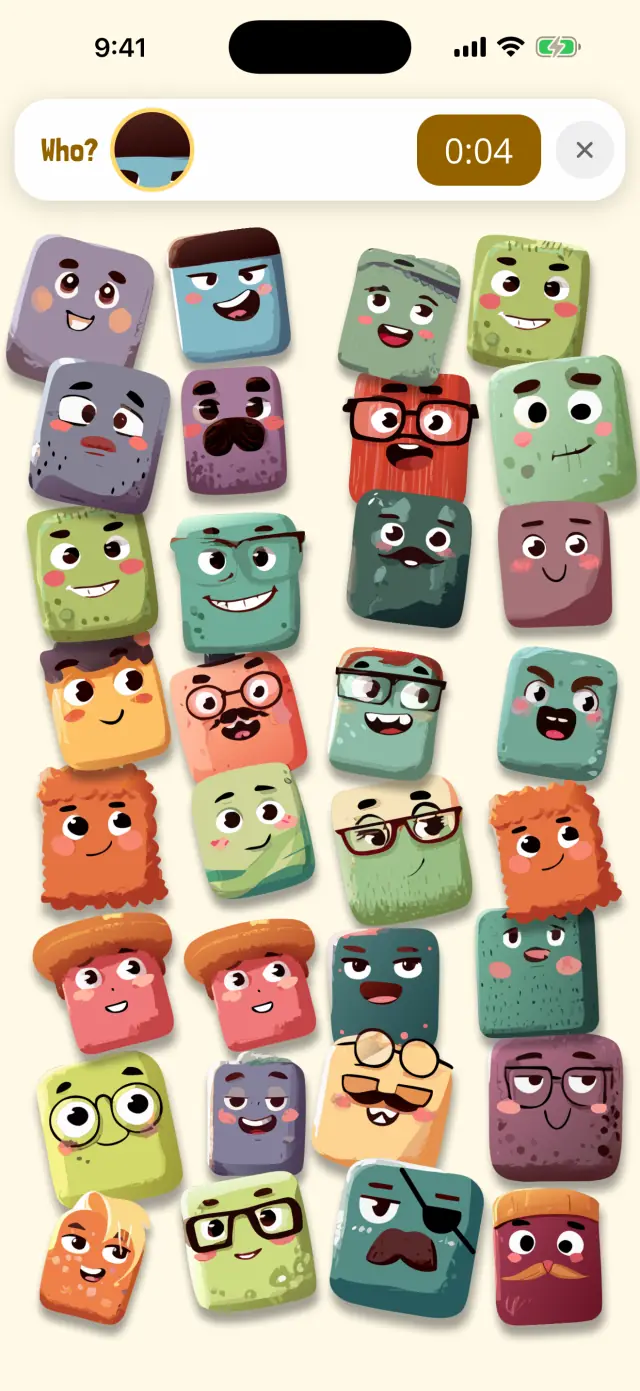
🔍 Peekaboo
Only a tiny bit of the Oopsie is showing.
Many autistic kids love seek-and-find games, and research helps explain why. Finding a target among look-alikes is called visual search, and being good at it is one of the best-documented strengths in autism research:
Two limits matter just as much:
So if your child loves picture books where you hunt for things, a seek-and-find game is worth a try, and the busier levels may be the hardest part. If they're not into it, that's normal too. None of this means a game can change anything about autism, and we don't claim Oopsies does. Our page on autism and visual search explains each study in more detail.
Looking further? For quiet moments, see calming games, and for short bursts of play, games for kids with ADHD. Our calm games for kids guide covers gentle iPhone and iPad games for ages 4 to 6. Oopsies is rated 4+, so for younger children, see our games for preschoolers (ages 2 to 4). And if ads are the main worry, our games with no ads list checks each game's ads and in-app purchases on the App Store.
There's no official label, and every autistic child is different. The points that come up most often: no time pressure, sound you can turn off, nothing unexpected (ads, pop-ups, flashing), one simple action shown with pictures, rules that stay the same, and help when your child is stuck. The printable checklist on this page covers all of them.
Oopsies is made for everyone 4 and up, and many of its choices (a timer that only counts up and can be hidden, no ads, one simple action) fit the checklist on this page. It's a game, made to be fun: not a therapy or a learning program, and not a communication (AAC) app. For those, your child's occupational therapist or speech-language pathologist is the best person to ask.
Yes. Tap the stopwatch at the top left of the home screen: a line through it means the timer is hidden. The timer and the "+10 s" after a wrong tap disappear from every level, and the times and leaderboard buttons disappear from the home screen. The setting stays until you tap the stopwatch again. Even with the timer showing, it only counts up: no level can be lost.
No. Most levels show a picture of the Oopsie to find, and the main thing to do is tap it. Some worlds add one more gesture, like wiping a foggy window. The collector cards have short, funny stories to read aloud if you like, but they're not needed to play.
Yes. Oopsies is the same free game on iPhone, iPad, Mac (M1 or later) and Apple Vision Pro. The bigger iPad screen gives the Oopsies more room to hide, and a bigger target to tap.
No ads, no in-app purchases and no chat. Oopsies is free, rated 4+, and its App Store privacy label says "Data Not Collected". Levels play in airplane mode, and progress syncs once you're back online.
Written by Karim Hadid, the independent developer who makes Oopsies. Karim isn't a clinician: this page describes the game and points to other sources. It isn't medical advice.
Reviewed by: not reviewed yet. We're looking for an occupational therapist or speech-language pathologist to check this page, and their name will appear here.
How we checked: every point about Oopsies was checked in the game's code. Research claims link to each study's page on Europe PMC.
A note on words: we say "autistic kids" because many autistic adults prefer it, but there's no single right way to talk about autism (British Psychological Society), and many parents say "kids with autism".
Sources
Spotted something wrong, or have a tip from your own family? Write to playoopsies@gmail.com.
Free, no ads, no in-app purchases. Hide the timer, turn the sound down if needed, and let your child find the first Oopsie at their own pace.